
Drew Roth · 22 November 2026
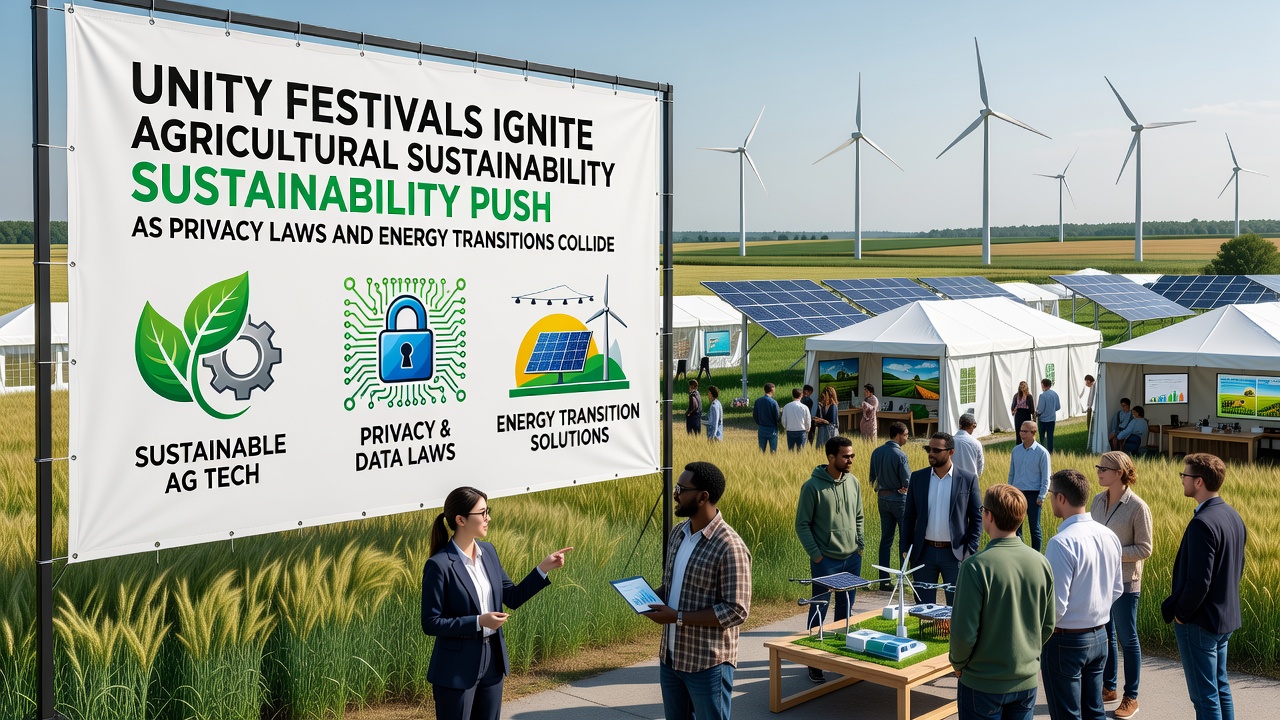
Unity Festivals Drive Agricultural Shifts as Privacy Regulations and Energy Changes Intersect with 2026 Elections
Unity festivals across multiple regions have aligned with agricultural sustainability initiatives in recent cycles, and data from the United Nations Food and Agriculture Organization shows increased adoption of low-input farming methods at event sites where organizers partner with local producers to demonstrate soil regeneration techniques. These gatherings feature workshops on crop rotation and water conservation, while participants learn about integrated pest management that reduces chemical reliance by measurable percentages according to field trials conducted through 2025.
Festival Programming Ties into Broader Sustainability Metrics
Event schedules incorporate live demonstrations of precision agriculture tools that track nutrient levels in real time, and researchers from the Australian Bureau of Agricultural and Resource Economics report that such hands-on sessions correlate with higher uptake rates among smallholder farms in participating districts. Organizers coordinate with regional cooperatives to supply ingredients sourced from verified sustainable operations, creating supply chains that shorten transport distances and lower associated emissions figures tracked by national environmental agencies.
Attendance records indicate steady growth in visitor numbers through the past three seasons, yet the focus remains on educational outcomes rather than scale alone. Studies compiled by Canadian agricultural research centers highlight how festival-led pilot projects have expanded cover-cropping acreage in adjacent counties, with satellite imagery confirming vegetation density improvements over baseline measurements from 2023 onward.
Privacy Regulations Shape Data Handling in Rural Sectors
Updated data protection frameworks now govern farm management platforms that collect soil sensor readings and yield forecasts, and compliance requirements from the European Data Protection Board have prompted developers to implement consent protocols before sharing aggregated datasets with third-party analysts. These rules intersect with election timelines as candidates address rural constituencies concerned about ownership of proprietary farming information collected through digital tools.
Industry associations in North America note parallel developments where state-level guidelines require transparent disclosure of how energy usage data from irrigation systems feeds into larger grid optimization models. Such measures affect how agricultural operators prepare documentation ahead of November 2026 voting periods, when policy platforms often reference both technological adoption and individual data rights.
Energy Transition Projects Overlap with Agricultural Land Use
Renewable energy installations on former pastureland have expanded in several jurisdictions, and statistics released by the U.S. Department of Energy document a 12 percent rise in agrivoltaic systems that combine solar arrays with continued livestock grazing beneath the panels. These configurations maintain forage production while generating electricity, and local planning boards review zoning adjustments that balance output targets with food security considerations.
Transmission line upgrades planned for rural corridors now incorporate consultations with farming representatives to minimize disruption during peak growing seasons, whereas grid operators in the United Kingdom adjust interconnection standards to accommodate variable renewable inputs from on-farm installations. Observers tracking these developments note that project timelines frequently align with pre-election policy announcements scheduled before November 2026.
Electoral Cycles Influence Policy Coordination Across Sectors
Campaign platforms in multiple countries reference agricultural sustainability alongside privacy safeguards and energy infrastructure investments, and voter outreach materials from parties in Australia and Canada emphasize measurable reductions in sector-wide emissions achieved through combined regulatory and incentive approaches. Public records from parliamentary debates reveal repeated references to festival-based education programs as models for community engagement on these overlapping issues.
Analyses prepared by academic teams at Wageningen University track how legislative proposals introduced in 2025 incorporate feedback loops from on-site demonstrations at unity events, creating iterative refinements to subsidy structures that reward verified sustainability outcomes. These adjustments occur against the backdrop of national election preparations, where rural economic indicators often feature prominently in candidate positioning.
Conclusion
Unity festivals continue to serve as venues where agricultural sustainability practices gain visibility, and the convergence with privacy regulations plus energy transition requirements shapes the context for November 2026 electoral discussions across affected regions. Government data sources and research institutions document ongoing implementation of these interconnected policies through coordinated stakeholder input.