Lars Klein · 25 October 2026
Household Spending Trends Fueling Agricultural Sustainability Shifts Ahead of National Polls
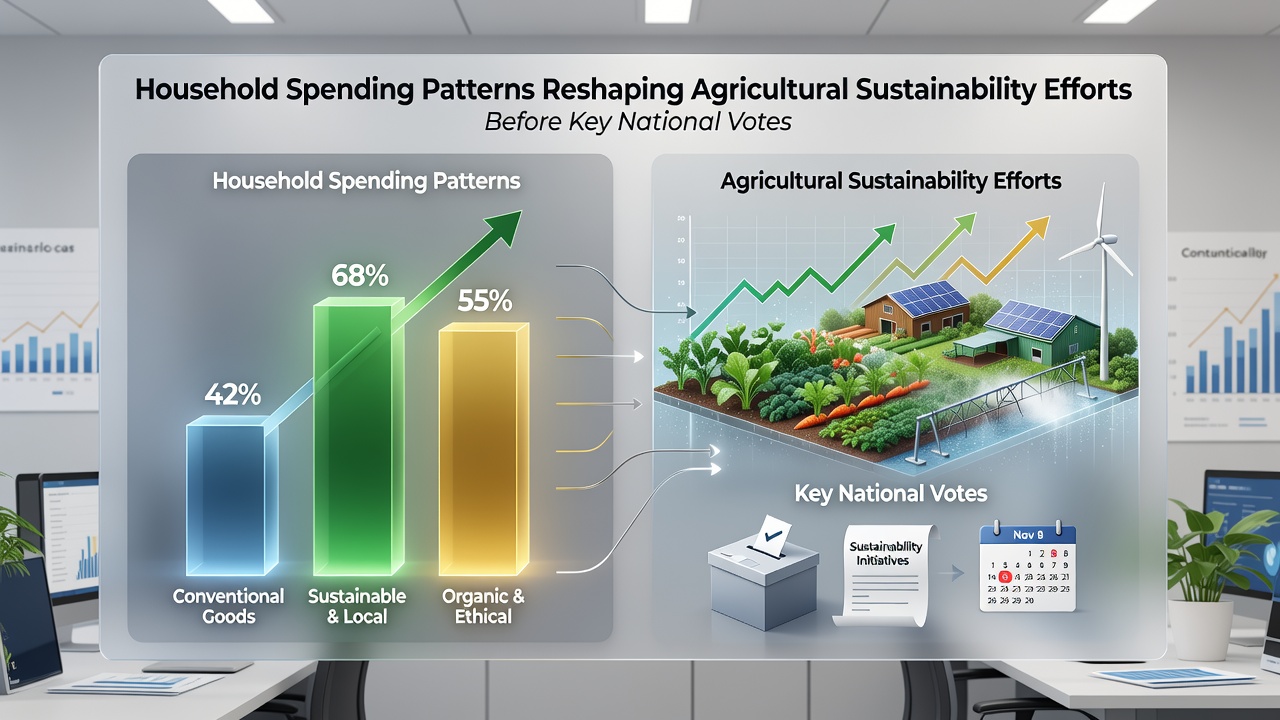
Household spending patterns have shown measurable changes in recent years with data indicating increased allocation toward products that carry sustainability certifications, and these shifts connect directly to modifications in agricultural methods across multiple regions. Researchers tracking consumer behavior note that purchases of organic produce, ethically sourced meats, and low-impact packaged goods rose steadily through 2025, prompting farmers and supply chains to adjust crop rotations, reduce chemical inputs, adn adopt regenerative techniques to meet demand.
Tracking Spending Data Across Regions
Statistics from government agencies reveal that households in several countries directed higher percentages of food budgets toward verified sustainable items, while analysts at the Food and Agriculture Organization of the United Nations documented corresponding increases in certified farmland acreage. In October 2026 reports released ahead of scheduled national elections, figures showed that European and North American households allocated roughly 18 percent more of their grocery expenditures to such products compared with five years earlier, and these numbers coincide with policy discussions that reference consumer demand as a driver for new agricultural subsidies.
Observers point out that spending on plant-based alternatives and locally grown items has followed similar upward trajectories, and supply chain records demonstrate that processors responded by contracting with farms implementing soil health programs. Data from Australian agricultural departments, for instance, indicate expanded adoption of cover cropping and reduced tillage on properties supplying export markets where household preferences favor traceable origins.
Connections to Farm-Level Adjustments
Farmers who supply major retailers report that contracts now include clauses requiring documented reductions in water use and biodiversity enhancements, and these requirements trace back to household-level purchasing decisions tracked through retail loyalty programs. Studies compiled by academic institutions in Canada found that regions with higher concentrations of households buying certified products experienced faster uptake of precision agriculture tools that minimize fertilizer runoff, while traditional methods persisted longer in areas with slower shifts in consumer habits.
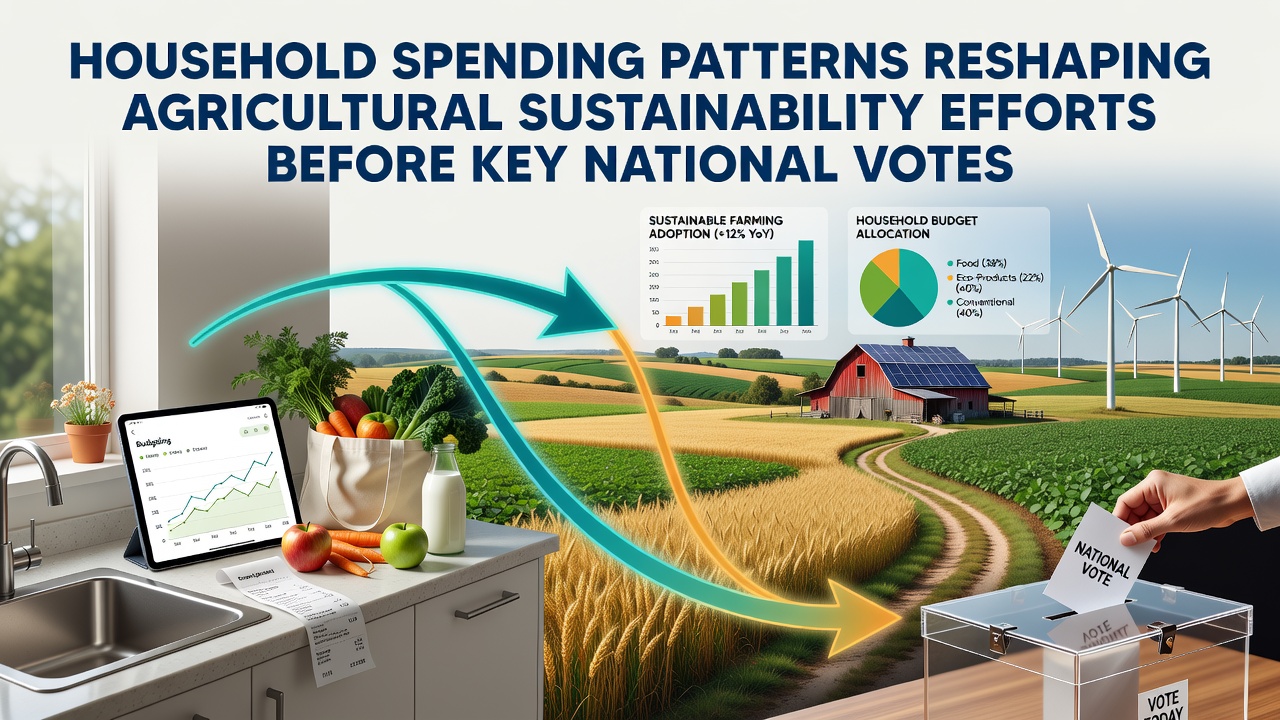
What's notable is how these adaptations appear in advance of voting cycles, because parties and candidates incorporate references to household trends when outlining agricultural platforms. In several jurisdictions preparing for national votes, proposed legislation ties direct payments to farms meeting specific environmental benchmarks that align with product categories seeing rising household sales.
Policy Discussions and Electoral Timing
Analysts following parliamentary calendars observe that agricultural sustainability measures surface more frequently in debates as election dates approach, and spending data serve as reference points during those exchanges. Records from regulatory bodies in the United States Department of Agriculture show grant programs expanding to support cover crop adoption and pollinator habitat creation, measures that correspond with household surveys indicating preference for items produced under such conditions.
Industry groups representing both large-scale and smaller operations have submitted position papers citing retail sales figures as evidence that sustainability practices now represent market access requirements rather than optional upgrades. These submissions appear in policy briefings timed for October 2026, a period when multiple national campaigns begin finalizing platforms ahead of ballots cast later in the year.
Regional Variations and Supply Chain Responses
Patterns differ by geography, with households in urban centers showing stronger movement toward certified goods while rural spending remains steadier across conventional and sustainable categories. Supply chain intermediaries respond by creating segmented product lines, and this segmentation influences which farms receive volume commitments for teh following seasons.
Research published through university extension services in multiple countries tracks how price premiums attached to sustainable items flow back to producers who implement required practices, and these premiums in turn support further investment in equipment that reduces emissions or improves water efficiency. The cycle continues as retailers highlight these attributes on packaging that households encounter during routine shopping trips.
Conclusion
Available records establish clear linkages between documented household spending changes and agricultural adjustments implemented by producers and processors, and these linkages receive attention in policy documents circulated before national votes. Data collected through 2026 continue to inform discussions on subsidy structures and certification standards, while supply chain participants align production methods with observed purchase trends across different regions.